


Years of Experience
0 +
Spotless Countertop Installation in Less Than a Week By 24+ years of experience and cutting-edge technology of Stone Fabrication & Installation there is no uncertanity


25391 Pleasant Valley Rd.
Chantilly, VA 20152
Phone: (703) 259-9027
5655 General Washington Dr
Suite G
Alexandria, VA 22312
Phone: (703) 259-9028
Calacatta Borghini marble is the classic white Italian marble that the word “Calacatta” was coined for: a bright white ground, veins that run in gray with a thread of gold running through them, and a clarity running between the veins that Carrara never has. It comes from a single quarry district above Carrara and is sold in grades. Distinguishing between the different grades is very important as it largely explains the price.
We stock two of those grades in Chantilly, both 2cm and both honed: Calacatta Borghini and Calacatta Borghini Extra. This page explains what separates them, where the stone sits in the Calacatta family, why we carry it honed, which rooms it belongs in, what it is like to live with, and what it tends to cost installed. For today’s slab count, go to live inventory.
Italian quarries grade white marble block by block, and “Extra” is the trade’s word for the top selection from a quarry: the whitest ground, the cleanest field between veins, the fewest fissures and gray clouds. It is not a different stone. The two lots on our floor came out of the same mountain and behave the same way on a counter; what you pay for with Extra is the more desirable appearance.
Calacatta Borghini (our standard lot). A white ground with a faint warmth to it, soft gray veins that run diagonally in loose bands, and areas of gentle gray shading between them. It reads as a classic Calacatta from across a room and as a slightly busier one up close. It is the better value and, in most kitchens, the one you would not know was the lesser grade unless the Extra slab was directly beside it.
Calacatta Borghini Extra (our premium lot). A brighter, cooler white with almost no shading in the field, and veins that are fewer, sharper, and more deliberate, in gray edged with gold. The slab looks drawn rather than clouded. This is the grade of Calacatta Borghini that is most often seen in photographs, and costs noticeably more per square foot.
How to choose. If the stone needs to take center-stage, a bookmatched island or a shower wall, the Extra lot earns its premium because every square foot is on display. If the stone is one of several things happening in the kitchen, with a patterned backsplash, warm cabinets, or a lot of fittings, the standard lot gives the same effect for less, since the gray shading gives the room depth. Take the opportunity to stand in front of both; the difference is obvious in person and almost invisible in photographs, including ours.
 Excellent
4.9283 reviews
4.9Excellent283 reviewsPosted on Google
 onur gökçe8 November 2026So many choices for cop terrors and solid pricing and service. Highly recommended.Posted on Google
 Jim Greene1 October 2026Staff is amazing…especially Nesli. Installers did an excellent job. I would definitely use them again.Posted on Google
 Michelle Carey22 September 2026Working with Frank was fantastic! He is extremely knowledgeable about the various types of materials, carefully and thoroughly walked us through the process, was very patient in showing us different options throughout the store, and quickly and efficiently set us up with an appointment for the installers to come out and measure. We felt such relief after talking to Frank and making our selections. We know that Frank and his team will take excellent care of us!Posted on Google
 Danielle Liu14 September 2026Friendly, professional and very responsive. Highly recommend!Posted on Google
 Peg Nielsen10 September 2026This surfaces place is the best! Nesli guided me in choosing a beautiful quartzite for my kitchen. We only paid by the square foot. The measuring, fabricating, and installation was very timely and efficient. Such a great experience! Will definitely recommend and use Landmark again!


 Posted on Google
 Shannon Ross31 August 2026Frank has been very helpful working with us in the countertop selection process!Posted on Google
 Nate Myers24 August 2026Frank was very helpful! Good customer servicePosted on Google
 Brennan Roy15 August 2026Patient, knowledgeable, and helpful, Tina and crew made for an excellent first-time customer experience. My quartz nightstand topper was fabricated quickly and with precision. It looks great and is exactly what I specified. Recommended!

 Posted on Google
 Rebecca Perry10 July 2026Wonderful service, Frank was super helpfulPosted on Google
 R Chandra23 June 2026We are so happy with United Granite. From stone selection to install, the entire team was incredibly professional and helpful. Especially Nesli - she is a true gem. We had some stressful general contractor issues, and she really went beyond to help us keep our project on track. We can't thank her enough!! 100% recommend.Posted on Google
 John22 June 2026Been working with Frank here for a few weeks on a laundry room renovation. He’s been very helpful with providing multiple estimates. I know I’m a needy customer, but he’s been very pleasant to work with. Highly recommend him
 Posted on Google
 Ellen Soroka18 June 2026We looked for over 2 years (Yes, you read 2 years.) to find a counter to match our shower wall and floor tile. Nesli, at United Granite, found exactly what we were seeking. She is a consummate professional and we are thrilled that Ayla, from Happy Homes Remodeling (highly recommend) sent us there. Look no further to find exactly what you want both in remodelers (Happy Homes in Springfield and United Granite for counters and slabs.Posted on Google
 Lesley Grosso6 June 2026Frank was very helpful and the process was quick and efficient with a large selectionPosted on Google
 A M6 June 2026Frank was awesome in keeping me in my price range and problem solving!Posted on Google
 Thao Dang30 May 2026I like nice store , I Buy many time Stone Decorate my house !Posted on Google
 Beth23 May 2026Just shopping for now, but Frank was very helpful.Posted on Google
 L Odria22 May 2026Frank provided exceptional services; from selection of stone, design and updating me on the availability of my purchase for pick up. I will definitely come back for stone and marble purchases.Posted on Google
 SIDD. Jyothi9 April 2026We got the Countertop installed in remodeled kitchen and mudroom project from the Landmark Surfaces. They did an outstanding job for a very satisfying outcome, from the time we went through planning/pricing discussion (with Nesli) to their workforce performing the measurements, fabrication and installation. Well done!Posted on Google
 Jamie Holzer7 February 2026Nesli was wonderful to work with. Very helpful, knowledgeable and polite. Tons of different material and slabs to choose from and I would definitely recommend!Posted on Google
 Nan Miller4 February 2026I highly recommend Landmark Surfaces. Friendly and efficient sales and scheduling. Skilled, knowledgable technicians for measurement and installation. Very professional from start to finish. Great pricing, too. Most importantly, our countertops look great! We are very, very happy with their workmanship.Posted on Google
 Lauren Nadler2 January 2026Knowledgeable, courteous service made making kitchen update choices easy. Fast turn around at fabrication provided incredibly fast completion. The demolition and replacement of counters was completed in 4 hours!!!! My kitchen looks updated and great. I’m really enjoying the larger counter space now. The team in the office and in my home were wonderful. Completely satisfied!

 Posted on Google
 Shelli Mayer23 December 2025We have used Landmark Surfaces United Granite on three separate occasions for quartz installations, most recently for our kitchen and previously for two bathrooms. In my prior review, I noted that I would use them again, and they have once more exceeded expectations. Landmark Surfaces United Granite is an exceptional company in every respect. Their customer service is consistently accessible by phone or email and always responsive. My primary contact has been Nesli, who is highly knowledgeable, professional, responsive, and a pleasure to work with. When she is unavailable, another customer service representative is able to step in seamlessly, immediately accessing my information and understanding my order without delay. Their pricing is consistently more competitive than other companies. For each of our three projects, I obtained estimates from two additional vendors, and Landmark Surfaces United Granite was always the most reasonably priced while delivering superior quality. Their workmanship is excellent, with careful attention to proper installation, clean lines, and precise pattern alignment. Turnaround times for templating and installation are also impressively quick. The combination of attentive service, fair pricing, timely execution, high-quality craftsmanship, and expertise is exceptional. I highly recommend Landmark Surfaces United Granite.

 Posted on Google
 Marsha4 December 2025I had a great experience with Landmark Surfaces. They pay attention to detail and they are customer oriented. They did a fabulous job on my countertops! They delivered on-time and were very professional. I would definitely recommend them to my family and friends and my job satisfaction was a 10 out of 10!Posted on Google
 Carol Bruno11 November 2025Tina was very professional, helping me to narrow down my choice of Dekton countertop, then giving me the address to visit the slabs in person to make a final decision of design. The tech who did final measurements at my home was efficient, and the crew who did the final installation was respectful of the space. I am already getting rave reviews of the completed kitchen!
 Posted on Google
 S kim5 November 2025Tina was an absolute dream. I walked into the showroom, with a tight schedule and even tighter budget, and yet she treated me like a client with a limitless fund. She took the time to show me all of the various options fitting my design/pricing criteria and followed up with a detailed explanation of what to expect and how to prepare for the installation. And no issues were insurmountable for her. When I had to leave town unexpectedly (sick mother) which threatened to derail our schedule for installation, she took care of all the details necessary to complete the project. At all times, she kept me updated. With all the things that can and do go wrong in a kitchen makeover, my experience with Tina was a welcome exception. Indeed, i look forward to working with Tina in my next kitchen project.Posted on Google
 Jeremiah Walsh1 October 2025Landmark Surfaces is a first-rate professional business built on integrity, timely customer service, superior quality craftsmanship and installation, and product knowledge. I am a returning customer with three previous purchases. I worked with Nesli Kohen who is a superb account executive who optimizes integrity and customer service. It was a true pleasure to work with this professional for the fourth time! I enthusiastically recommend Landmark Surfaces for your next project!Posted on Google
 Albina Galieva30 September 2025The store has a very good selection of quartz. I found exactly what I was looking for. The team was very attentive and provided excellent services for a great price. Highly recommend them.Posted on Google
 Holly16 June 2025We have gotten multiple projects done here at Landmark services and have always been very happy with the fantastic customer service. Most notably I want to give a huge shout out of thanks and appreciation to Samantha Estacion for her help with our Hall bathroom upgrade. Samantha helped us with an 8 ft long super white marble shelf under our window, vanity top, threshold and toilet paper holder base. Everything was done to perfection! we love the results. Samantha was very kind and caring. She knows a lot about the different products and has great attention to detail, helping us finalize the designs. Thanks so much for your help Samantha!


 Posted on Google
 cindy luu6 May 2025My experience at Landmark was exceptional, from research to customer service and installation. Tina made the process very smooth; she was responsive to all my questions and provided follow-up. The installation went very smoothly, thanks to the team's promptness, meticulousness, and courteousness. I would go back to them for future projects.Posted on Google
 Lemony Lavender26 April 2025My husband and I went in to see about replacing our kitchen counters, and Robiya was such a huge help. She was very thorough, knowledgeable, and patient with us as she helped us find the perfect stone for our kitchen. When it came time to begin the process of removal of the old, measurements, and scheduling installation…the whole process was seamless and easy. The communication and follow up between Robiya and the service team was efficient and professional. If I had any questions or concerns, they were quick to respond with answers and advice. The overall turn around of the project from start to finish was very quick. We had a great experience working with Landmark surfaces and will definitely be returning for future projects.Posted on Google
 Joyce Schaefer23 April 2025Granite was beautiful. Tina was great to work with and the installation team did a great jobPosted on Google
 Lois Berlin21 April 2025Our experience at United Granite was excellent. From sales to measurement and drawings and installation, everyone was extremely professional and the installation was perfect. We are so pleased with how beautiful and how well fitted our counters are. I highly recommend them.Posted on Google
 Janice Mattheson15 April 2025Tina helped me with my selection, which was very easy. Girardo came out (twice) and took the measurements (my husband and I thought the process of installing cabinets was easy…It was not) he was very professional . Today the installers quickly installed the countertops and they’re beautiful…I love it❤️ Thank you!

 Posted on Google
 Jenna O’Brien15 April 2025Pleasant and Professional! I'm a decorator and I work with a LOT of contractors. I highly recommend Tina and the team at Landmark.They are easy to work with, very responsive, and come to the table with a wealth of knowledge. The process from quote to install was seamless.Posted on Google
 Mickey Mouse23 March 2025Tina was super helpful and a pleasure to work with! I needed options for my bathroom vanity. Even though it was a small project working with their remant section I found the perfect piece to complete my bathroom renovation. The installation crew did impecable work with solid eye on attention to detail. Definitely plan and using Tina and her crew for my last bathroom renovation.


 +2
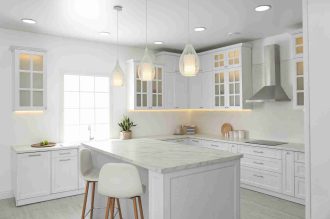
Borghini is the marble people buy when they want the classic magazine-worthy white marble kitchen. Because we stock it honed, it is more at home in a working kitchen compared to most Calacattas. The places we would steer you elsewhere are mentioned after the cost section.
The honed finish is what makes a full Borghini kitchen suitable for everyday use: etch marks are far less noticeable on the matte white finish. The large standard-lot slabs can cover a long island in one piece; the Extra lot is chosen to make a statement when doing a bookmatched island with a waterfall end.
Vanity, tub deck, and shower walls from consecutive slabs so the veins flow through the room. Honed marble underfoot in a shower is also less slippery than polished. This is where the Extra lot is most often used to its fullest effect.
A single slab standing vertical, or a pair bookmatched, with the gray-gold veins running up the wall. The 2cm thickness is made for this; nothing spills on it, and the honed surface softens angled light without producing glare.
Dining and coffee tables, console tops, a built-in bar, a window seat. Small pieces can come from the best corner of a slab or from the remnant of a kitchen job, which is an economical way to use this stone.
Whether you’re seeking a free estimate, a showroom visit, or an in-home evaluation, our team is ready to transform your space.
“Calacatta” is not one marble. It is a family of white marbles from the quarries above Carrara, each named for its quarry or its selection, and the names on a price list are easier to understand once you know what each one means. The Italian trade’s own reference, the CMP Solmar handbook of Apuan commercial names, describes Calacatta as a whole as having a creamier ground than Statuario, with a wider range of shades and larger, denser veins, and lists the members by their veining:
| Name | Veining (per the Apuan trade handbook) | What that means on a slab |
|---|---|---|
| Calacatta Borghini | White with golden and gray veins | The balanced one: gray veins carrying gold, on a clean white. The reference Calacatta for most designers. |
| Calacatta Vagli | White with gray, brown, pink, and golden veins | Warmer and busier; more colors in the vein. |
| Calacatta Vagli Oro Extra | White with golden veins | The gold-dominant selection, often sold in the US simply as “Calacatta Gold” or “Calacatta Oro.” |
| Calacatta Monet | White with gray, brown, pink, and golden veins | Soft, painterly, multi-toned; the current favorite for warm-white kitchens. |
| Calacatta Luccicoso | White with fine veins | Quieter, closer to a bright Carrara. |
When customers ask for Calacatta Gold and Calacatta Borghini, they are asking for cousins within the same marble family: closely related stones with distinct characteristics. Borghini carries its gold inside gray veins on a white ground, while the Oro and Gold selections carry gold on its own. If you want warmth without the veins going yellow, Borghini is the usual choice. We carry several of these Calacatta varieties; the marble collection lists what is currently on the floor.
The rock itself. All of these stones are calcite marble, metamorphosed limestone, with two identifying properties highlighted in the Geology.com marble reference: a Mohs hardness of about 3, and a reaction with acids. The gold in the veins is iron oxide folded into the calcite; the gray is clay and organic traces. These are visual characteristics rather than surface treatments, and they do not make the stone harder or softer than any other Calacatta.
Two things sold under the Borghini name that are not this stone. Several engineered quartz brands sell a “Calacatta Borghini” or “Borghini” quartz, printed to resemble it; we carry one. It does not etch and has no depth. Also, lookalike marbles from Turkey and elsewhere are occasionally labeled Borghini; ours are Italian, and the lot tag on the slab confirms this.
Most distributors show Calacatta polished, because polish is what makes a white marble glow under showroom lights. We bring Borghini in honed, on purpose, and our reason is the kitchen.
An etch mark on marble is a loss of surface shine where an acid has sat. On a polished top it is a permanent dull print until the surface is re-polished. On a honed top there is no shine to lose, the same lemon slice that may leave a mark on a polished finish is only visible at a low angle, and on a bright white marble such as Borghini, it is often barely noticeable. A honed Borghini kitchen looks the way it did on day one for far longer than a polished one, with the same stone and the same care. The trade-off is brightness: honed white is a soft white, not a mirror-like shine. Most people who see the two side by side in the warehouse choose honed stone for a counter and keep polished stone for a bathroom or a fireplace. We can polish a slab upon request.
The standard lot. Calacatta Borghini, 2cm honed, and about 122 by 72 inches. White with a faint warmth, diagonal gray veining in loose bands, soft gray shading between the bands. Large slabs; a long island usually comes from one single slab. There are several on the floor as of this writing.
The Extra lot. Calacatta Borghini Extra, 2cm honed, about 110 by 65 inches. Brighter, cooler white, a clean field, and sharper gray-and-gold veins. Smaller slabs, which matters for layout: a ten-foot island needs a seam or a different design approach. There are several on the floor as of this writing. Check live inventory for today’s count of each.
What 2cm means. For walls and showers, 2cm is the right thickness and the lighter slab is an advantage. For countertops the edge is built up, laminated or mitered, to read as 3cm or thicker, and narrow strips are rodded for extra strength. The edge you see is a choice, not the standard; the fabrication notes below cover this in more detail.
Calacatta varies more block to block than Carrara does, and the Extra grade exists because of that variation. A future lot of either may run warmer, grayer, or have more gold than the slabs photographed here. The slab you choose is tagged to your job the day you choose it.
Borghini is a solid marble that fabricates reliably, which is partially why it is the Calacatta we recommend for kitchens. The notes below are about making it look its best.
Vein direction and continuity. The veins run diagonally and they are the main attraction. We lay the kitchen out on the digital template so a vein that leaves the island on one side arrives on the perimeter at the same angle, and so the backsplash, if cut from the same slab, continues the line up the wall. On the Extra lot, with fewer veins, each one is placed deliberately; on the standard lot the pattern forgives more.
Bookmatching. Consecutive slabs mirror each other, and a bookmatched Borghini island or shower wall is the single most requested thing we do in marble. The Extra lot, with its clean field and bold veins, bookmatches more dramatically; the standard lot bookmatches more softly. Either way it doubles the slab count, and we show you the mirrored layout before anything is cut.
Edges on 2cm. A mitered edge, folded down at 45 degrees to the thickness you want, is the right edge for a veined white marble because the veins carry over the corner. A laminated edge is less expensive and well suited where the edge is mostly hidden. We ease every exposed corner; marble chips on a sharp 90-degree corner more readily than granite.
Seams. A seam across a bold vein is visible. We place seams where the field is clean and, on the Extra lot, between veins rather than through them, which sometimes means a seam is moved slightly to create the best visual result. On a bookmatched pair the seam is always the centerline by design.
Cutouts and rodding. Every narrow strip at a sink or cooktop is rodded. Undermount sink cutouts are eased and honed to match the top. We keep cutouts out of the heaviest veins where the layout allows; a vein crossing a sink corner is where a marble top could crack if it ever does.
Sealing in the shop. Honed white marble is the most open surface we sell, so every piece gets a penetrating sealer before it leaves and a second coat at installation.
Weight and lead time. A 2cm slab at 122 by 72 inches weighs roughly 700 pounds; the Extra lot at 110 by 65 is about 570 pounds. Fabrication and installation typically run 5 to 7 business days from template.


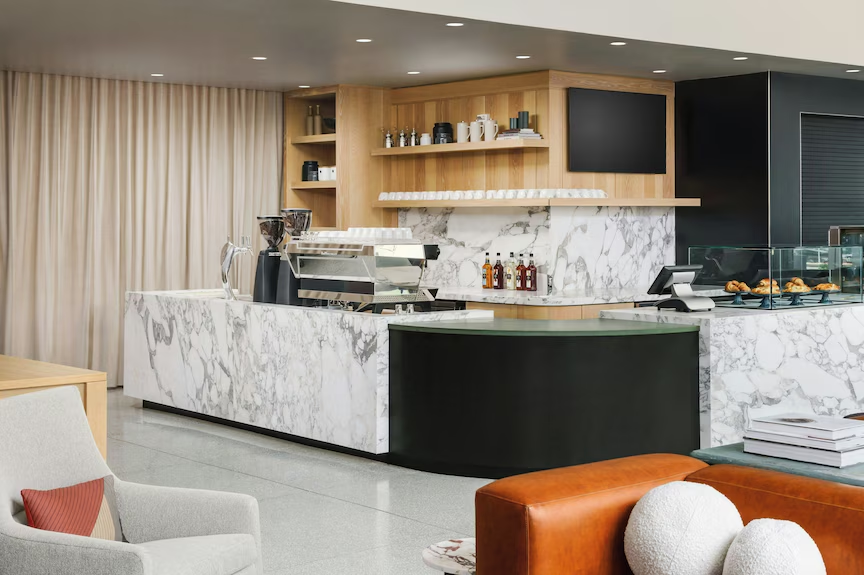
Calacatta Borghini marble typically runs $120 to $200 per square foot installed for the standard lot and $160 to $260 for Borghini Extra. The gap between the two is almost entirely the cost of the slab; fabrication is the same. Both sit well above a White Carrara and a little below the rarest breccias such as Calacatta Viola.
What moves the number:
For comparison, the Calacatta quartzites on our floor run $90 to $200 per square foot installed, and the engineered quartz sold under the Borghini name roughly $60 to $110. Our countertop installation cost guide explains what makes up an installed price.
All figures are general ranges. The real number depends on the lot and slab, the square footage, the edge, the number of seams and cutouts, and whether the layout is bookmatched. This is set at the free in-home estimate after we have measured.
A white marble kitchen asks for a few maintenance practices and rewards you with a surface nothing engineered can match. Here is honed Borghini next to the two things it is most often weighed against.
| Day to day | Honed Calacatta Borghini | Calacatta quartzite | “Borghini” engineered quartz |
|---|---|---|---|
| Lemon, wine, vinegar, tomato | Etches; nearly invisible on honed white | No etching | No etching |
| Knives and dragged pots | Scratches; use boards and felt | Resists | Resists |
| Hot pans | Tolerates heat; trivets anyway | Tolerates heat | Can scorch the resin |
| Stains (oil, coffee, red wine overnight) | Possible on a white; sealer slows, poultice lifts | Rare when sealed | None |
| Sealing | At install, then yearly in a kitchen | At install, then every 1 to 3 years | None |
| Repair | Etches and scratches re-honed in place | Rarely needed | Chips are permanent |
| Pattern | Unique, through the full thickness, bookmatches | Unique | Printed, repeats, surface only |
| Installed cost per sq ft | $120 to $260 by grade | $90 to $200 | $60 to $110 |
Etching. Calcite reacts with acid; the Natural Stone Institute’s care guide names lemon, vinegar, and other acids as the culprits that dull or etch calcareous stone. On honed Borghini the mark is a slightly lighter patch visible at a low angle, and on a white ground it fades into the surface with continual use. Keep bathroom sprays and citrus cleaners away from it, and the stone will not ask for anything else.
Stains and sealing. White marble shows a stain that a gray one hides, so the sealer matters: at installation and about once a year in a kitchen, less in a bathroom. Wipe oil and red wine before it stains. A dark spot that does appear comes out with a poultice, which we can supply or do for you.
Cleaning. Warm water and a pH-neutral stone soap. No vinegar, no abrasive pads, and no regular use of bleach. A cutting board for knives, felt under anything that gets dragged, coasters under wine.
Where we would slow you down
For where marble sits among the stones people actually install, see our guide to the types of natural stone countertops.
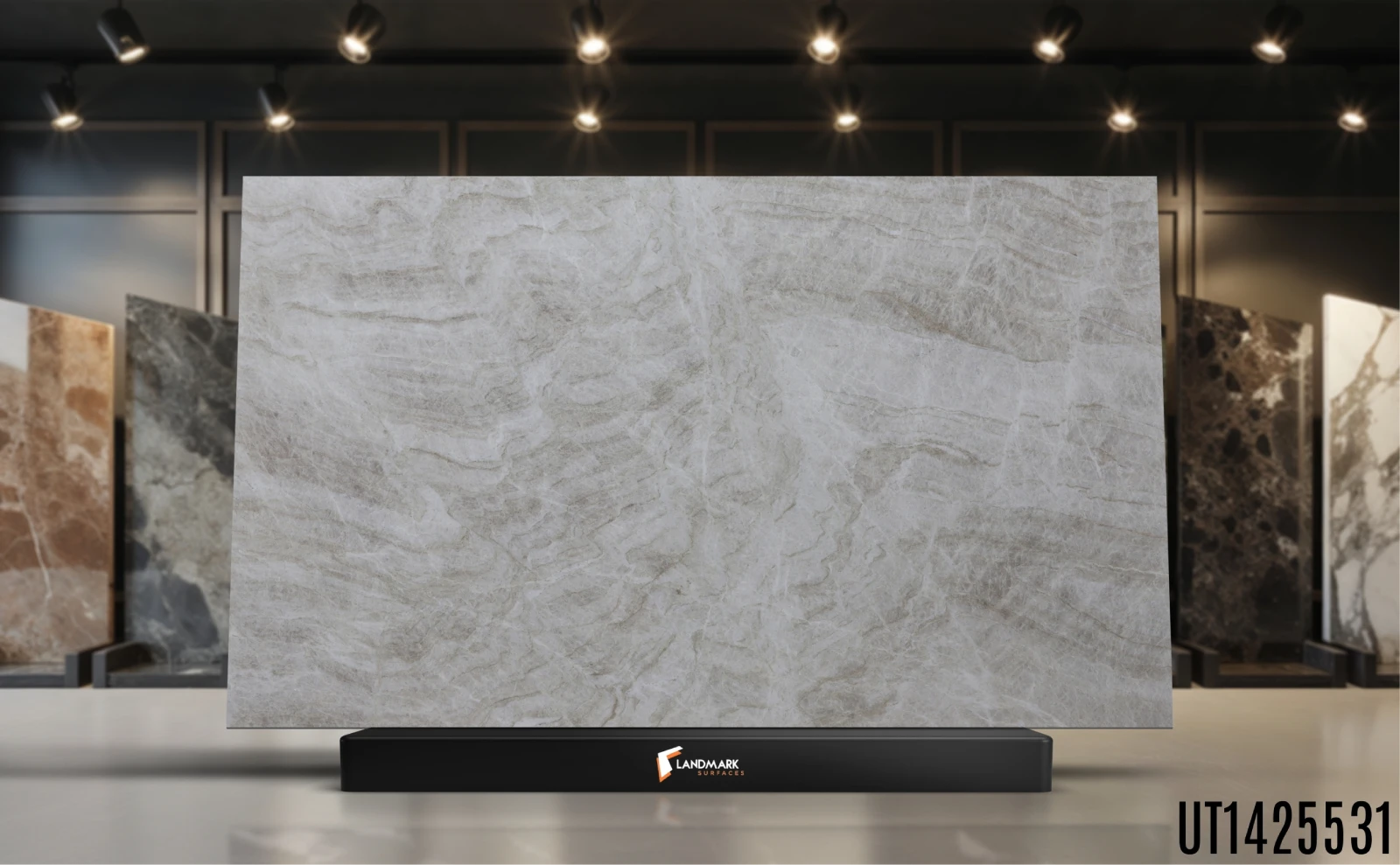


Same stone, different selection. Extra is the quarry’s top grade: a brighter, cooler white with a clean field and fewer, sharper gray-and-gold veins. The standard grade has a warmer white with soft gray shading between looser veins. They behave identically on a counter; Extra costs more because of the look.
No, but they are cousins from the same quarries above Carrara. Borghini carries gold inside gray veins on a white ground. Calacatta Gold and Calacatta Oro selections carry gold veins on their own, so they read warmer and more yellow.
Yes, honed. It etches from acids and scratches from knives like every marble, but on a honed white surface the marks are close to invisible. We stock it honed for that reason. Polished Borghini belongs in bathrooms and on fireplaces.
It comes from a small quarry district, the blocks are graded and the clean ones are rare, and a white marble is cut and handled more carefully than a dark granite. Installed cost typically runs $120 to $260 per square foot depending on the grade.
Yes. A penetrating sealer at installation and about once a year in a kitchen. It slows stains and buys time to wipe up spills; it does not stop etching. Re-seal when water no longer beads on the surface.
Usually, yes, in 2cm honed slabs of both the standard and Extra grades, but natural stone inventory changes weekly. Check the live inventory page or contact us before visiting, and we will tell you what is on the floor that day.
Calacatta Borghini is best evaluated with both grades side by side, where the differences are far easier to appreciate than they are on a screen. Both lots are in our Chantilly warehouse; bring a cabinet door and a backsplash sample, and ask us to show you an etched honed sample before you decide on a finish.
Pricing and lead times on this page are general ranges for planning purposes. Actual cost depends on the grade and slab selected, measured square footage, edge build-up, seams, cutouts, and whether the layout is bookmatched, and is confirmed at your free in-home estimate. Slab availability changes weekly. Natural stone varies from block to block, and future lots of Calacatta Borghini may differ in whiteness, vein density, and the amount of gold from those shown. Marble etches and scratches in normal use; this is a property of the stone, not a defect. Warranty terms vary by product, typically 6 to 10 years.
