


Years of Experience
0 +
Spotless Countertop Installation in Less Than a Week By 24+ years of experience and cutting-edge technology of Stone Fabrication & Installation there is no uncertanity


25391 Pleasant Valley Rd.
Chantilly, VA 20152
Phone: (703) 259-9027
5655 General Washington Dr
Suite G
Alexandria, VA 22312
Phone: (703) 259-9028
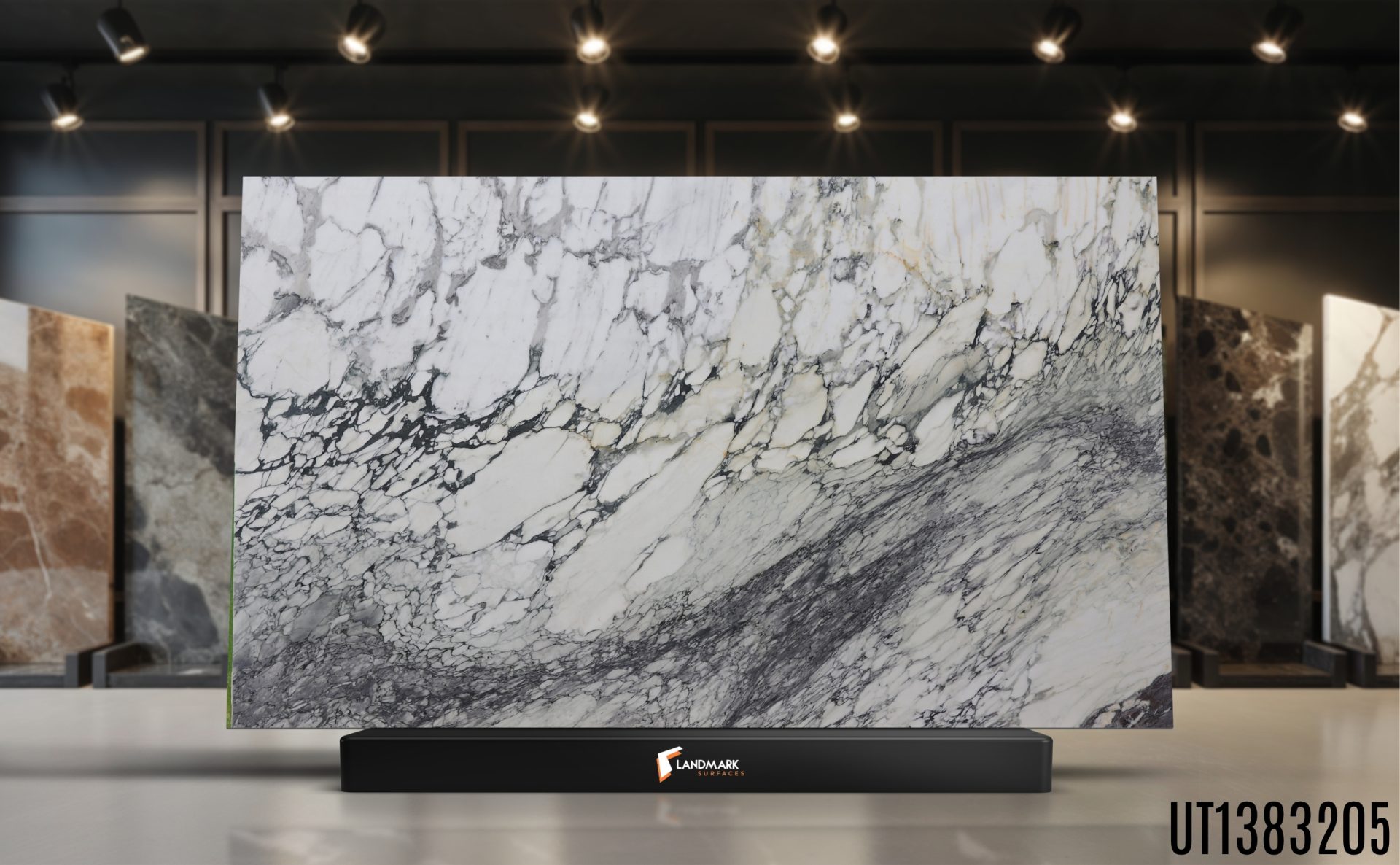
Breccia Capraia marble is a white Italian breccia made up of angular white and cream fragments, tied together by gray veining and occasional strokes of darker gray and gold.
It comes from the same Versilia valleys above Seravezza that produce Calacatta Viola, and it has the same mosaic pattern. Where Viola is loud and purple, Capraia is quiet and gray, which is why it ends up in rooms where Viola would dominate the space.
We stock the Extra grade in Chantilly as 2cm polished slabs, large ones at about 126 by 78 inches. This page covers what makes a breccia marble different, how Capraia compares with Calacatta Viola, how we fabricate it, where it is most often used, how it performs over time, and what it typically costs. For today’s slab count, go to live inventory.
Before it became a marble name, “breccia” was a geological term, and understanding it explains almost everything about how this stone is bought, cut, and lived with. A breccia is a rock made of broken, sharp-edged fragments that were later cemented back together. The Geology.com breccia reference defines it by that angularity: in a breccia the large particles are angular, where in a conglomerate they are rounded, because the fragments did not travel far enough to wear down. In the marble trade the word covers stones like this one, where a marble was shattered by mountain-building forces and mineral-rich water then cemented the pieces back into a solid block. The Oxford University Museum of Natural History’s Corsi collection describes the Seravezza breccias in exactly those terms, as tectonized, sheared marble, and records that they have been quarried around Stazzema and Seravezza since the seventeenth century.
With that in mind, a Breccia Capraia slab no longer looks like a collection of random shapes, but a mosaic of fragments joined by veining. The white and cream areas are the original marble, broken into pieces the size of a hand or a plate. The gray veining is the material that filled the fractures, its color coming from clay and iron. The darker band is a zone where the fracturing was denser. The fine gold veining marks the last stage of the process, when iron-rich water moved through fractures that remained open. Each element of the pattern, every fragment, vein, and color change reflects a stage in the stone’s formation.
Why it matters at the counter. The way this stone was formed has three practical implications. First, a breccia is held together by its veins, and the veins are where any potential weakness lives, so slabs arrive resin-filled and mesh-backed. Then a careful fabricator keeps cutouts and sharp corners out of the vein network. Second, the pattern is a texture rather than a flow: there is no vein to chase from one piece to the next, which makes layout easier than on a Calacatta, though consecutive slabs still mirror well enough for bookmatching. Third, the chemistry is ordinary marble. The fragments and the cement are both calcite, Mohs 3, and both react with acid. A breccia etches like any other marble, no more and no less.
Breccia marbles have been used for floors, walls, furniture, and sculpture since the Renaissance, and the Seravezza quarries even supplied the Medici family. On a modern countertop the same stone is at its best where its mosaic can be seen whole and where acids are rarely in contact with it, which is the subject of the rest of this page.

 4.9287 reviews

 Trustindex verifies that the original source of the review is Google.
 Trustindex verifies that the original source of the review is Google.
 Trustindex verifies that the original source of the review is Google.
 Trustindex verifies that the original source of the review is Google.
 Trustindex verifies that the original source of the review is Google.
 Trustindex verifies that the original source of the review is Google.
 Trustindex verifies that the original source of the review is Google.
 Trustindex verifies that the original source of the review is Google.


 Trustindex verifies that the original source of the review is Google.
 Trustindex verifies that the original source of the review is Google.
 Trustindex verifies that the original source of the review is Google.


 Trustindex verifies that the original source of the review is Google.
 Trustindex verifies that the original source of the review is Google.
 Trustindex verifies that the original source of the review is Google.

 Trustindex verifies that the original source of the review is Google.
 Trustindex verifies that the original source of the review is Google.
 Trustindex verifies that the original source of the review is Google.
 Trustindex verifies that the original source of the review is Google.
 Trustindex verifies that the original source of the review is Google.
 Trustindex verifies that the original source of the review is Google.
 Trustindex verifies that the original source of the review is Google.
 Trustindex verifies that the original source of the review is Google.
 Trustindex verifies that the original source of the review is Google.
 Trustindex verifies that the original source of the review is Google.


 Trustindex verifies that the original source of the review is Google.


 Trustindex verifies that the original source of the review is Google.
 Trustindex verifies that the original source of the review is Google.

 Trustindex verifies that the original source of the review is Google.
 Trustindex verifies that the original source of the review is Google.
 Trustindex verifies that the original source of the review is Google.
 Trustindex verifies that the original source of the review is Google.


 Trustindex verifies that the original source of the review is Google.
 Trustindex verifies that the original source of the review is Google.
 Trustindex verifies that the original source of the review is Google.
 Trustindex verifies that the original source of the review is Google.
Breccia Capraia is a stone for rooms that want pattern, but without using color, and because the pattern is a texture rather than a flow, it suits large surfaces better than most veined marbles do. The cases where we would steer you elsewhere are after the cost section.
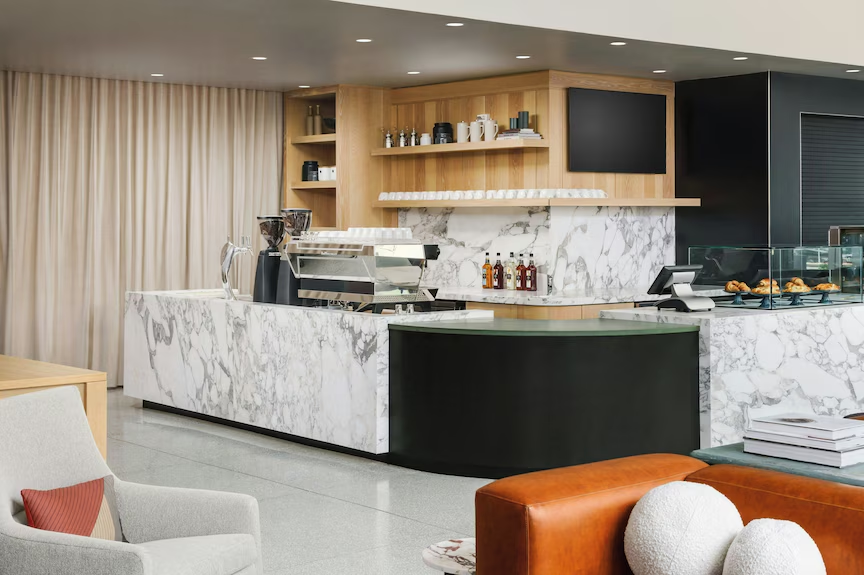
The first choice. Shower walls in bookmatched slabs, a tub deck, a vanity top. The mosaic reads as a single wall of stone rather than a repeating vein, and the surface sees little acid exposure common to countertops. The 2cm thickness is the right one for walls since it is lighter to hang.
A full slab standing on end, with the darker band placed where you want the eye to rest, or a pair mirrored into a chevron motif. This is the application the Seravezza breccias were quarried for in the first place: architecture, not countertops.
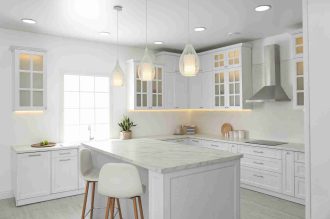
An island with a harder stone on the perimeter is how most of our clients bring Capraia into a kitchen. The large slab covers most islands in one piece, and the gray web hides the small marks a plain white would put on show. Polished, it will etch where acids land; we can hone a slab for a working island.
Small, high-visibility pieces that can be cut from the most dramatic corner of a slab or from the remnant of a larger job. A powder room vanity in this stone does not require much material, yet it often becomes the most memorable feature in the room.
Whether you’re seeking a free estimate, a showroom visit, or an in-home evaluation, our team is ready to transform your space.
These are the two breccias on our floor, both from the same valleys and shaped by the same geological process. People who like one almost always look at the other. In the end, the decision is mostly about color and how much movement you want in the room.
| Breccia Capraia (Extra) | Calacatta Viola | |
|---|---|---|
| Ground | White to cream | White to cream |
| Vein color | Gray web, one darker gray band, gold threads | Plum, burgundy, violet |
| Mood | Quiet, architectural, reads as texture | Loud, saturated, reads as color |
| Works with | Almost any cabinet color; warm and cool metals | Needs the room designed around it |
| Our stock | 2cm polished, about 126 x 78 in | 3cm and 2cm polished, two lots |
| Bookmatch | Yes, subtle | Yes, dramatic |
| Care | Marble: etches, seal yearly | Marble: etches, seal yearly |
| Installed cost per sq ft | $110 to $200 | $140 to $280 |
Choose Capraia when the goal is balance: when the cabinetry or tile carries the color, or when a shower or wall needs a large stone surface that feels elegant rather than dramatic. Choose Viola when the stone is the focal point of the room. If you are drawn to the mosaic structure and cannot decide on color, Capraia is the one you will not get tired of.
One name to keep separate. Several other stones are sold as “Breccia” something: Breccia Oniciata (a beige Italian breccia), Breccia Pernice (red-brown), Breccia Medicea (a historic Seravezza breccia with green and red). They share the structure, not the look. On this page, Breccia Capraia means the white-and-gray stone in the photographs above.
Our Breccia Capraia in Chantilly is the Extra grade, 2cm polished, about 126 by 78 inches, from one lot. “Extra” is the quarry’s top selection: the whitest ground, the cleanest fragments, with the fewest open fissures, which on a breccia is the grade that matters most because it means less filling and more sound stone. Several slabs are on the floor as of this writing; check live inventory for today’s count.
How the lot reads. The ground is a soft white with cream in the larger fragments. The gray web runs across the whole slab in a fine net, denser toward one corner, and a darker gray band crosses the lower third at a diagonal; that band is the defining feature of this lot and should be placed deliberately. Thin gold threads run through the web which brighten under warm light. Consecutive slabs mirror each other, and the band mirrors with them, so a bookmatched pair makes a V or a chevron pattern depending on which way the slabs are turned.
Why polished, and when to hone. This lot came in polished, and on a gray-and-white stone polish is what gives the fragments their depth; honed, the gray flattens toward the white and the mosaic softens. For walls, showers, and fireplaces, a polished finish is what works best. For a working kitchen island we can hone a slab, which hides etching while softening the overall look of the stone; we will show you both on offcuts before your final decision.
What 2cm means. The right thickness for walls and showers, and at about a third lighter than 3cm to hang. For a countertop the edge is built up by lamination or a miter to read as thicker, and narrow strips are rodded for additional strength. The edge you see is a choice and not the industry standard.
Breccias vary block to block more than solid marbles, because every block formed differently. A future lot may carry more or less of the dark band, more gold, or a creamier ground than the slabs photographed here. The slab you choose is tagged to your job the day you choose it.
In a breccia, the fragments are strong and the veins act as the joints, so fabrication is built around keeping stress away from the vein network.
Backing and fills. Slabs arrive from Italy resin-filled and mesh-backed. We check every slab under light before it goes on the saw and mark the fills; a fill along a vein is normal on this stone and is not a defect, while a soft spot in a white fragment is something we route around. The Extra grade has fewer of both, which is part of what drives the higher price.
Cutouts in the field. Sink and cooktop cutouts go through the largest white fragments we can find, never through the dark band or a dense part of the web. A corner of a cutout sitting on a vein is where a breccia may crack if it ever does, so we move cutouts a few inches rather than take that risk.
Placing the band. The darker diagonal band is the main feature of this lot. On an island we put it where it is seen in full and away from the sink; on a shower wall it becomes the centerline of a bookmatch; on a vanity it can be left out entirely by cutting from the quieter end of the slab. We decide this on the digital template with you.
Seams. A seam that follows a vein in the web disappears; one across a white fragment shows. On a texture this fine we have more choices than on a bold Calacatta, and seams are easy to lose.
Edges on 2cm. Mitered for a thick look with the pattern folding over the corner; laminated where the edge is hidden. We ease every exposed corner and avoid heavy ogee profiles on breccia because the profile crosses many fragment boundaries and breaks the visual flow of the stone.
Rodding and handling. Every narrow strip at a sink or cooktop is rodded. Breccia slabs are moved and installed with more hands than a solid marble of the same size as an added precaution.
Sealing in the shop. Every piece gets a penetrating sealer before it leaves and a second coat at installation.
Weight and lead time. A 2cm slab at 126 by 78 inches weighs roughly 780 pounds. Fabrication and installation typically run 5 to 7 business days from template.


Breccia Capraia marble typically runs $110 to $200 per square foot installed for the Extra grade, which places it with the Calacattas, but below Calacatta Viola. The slab accounts for most of that price: the Seravezza breccia quarries are small, and the Extra selection is a fraction of what they cut.
What moves the number:
For comparison, a White Carrara installs at roughly $70 to $130 per square foot, Calacatta Borghini at $120 to $260 by grade, and the Calacatta quartzites at $90 to $200. Our countertop installation cost guide explains what makes up an installed price.
All figures are general ranges. The real number depends on the slab, the square footage, the edge, the number of seams and cutouts, and whether the layout is bookmatched. It is set at the free in-home estimate after we have measured.
A polished breccia is a marble first and a mosaic second. The structure makes it forgiving of small marks; the chemistry makes it unforgiving of lemon juice. Here it is next to the two other most common alternatives.
| Day to day | Polished Breccia Capraia | Calacatta quartzite | Marble-look porcelain |
|---|---|---|---|
| Lemon, wine, vinegar, tomato | Etches: a dull spot on the polish; hidden somewhat by the web | No etching | No etching |
| Knives and dragged pots | Scratches; use boards and felt | Resists | Resists |
| Hot pans | Tolerates heat; trivets anyway | Tolerates heat | Tolerates heat |
| Stains (oil, coffee, red wine overnight) | Possible in the white fragments; sealer slows, poultice lifts | Rare when sealed | None |
| Sealing | At install, then yearly on a counter | At install, then every 1 to 3 years | None |
| Repair | Etches re-polished or the top honed in place | Rarely needed | Chips are permanent |
| Pattern | Unique mosaic through the full thickness | Unique | Printed, repeats, surface only |
| Outdoors | No | Yes | Yes |
| Installed cost per sq ft | $110 to $200 | $90 to $200 | $60 to $120 |
Etching. Calcite reacts with acid; the Natural Stone Institute’s care guide names lemon, vinegar, and other acids as the most common substances that dull or etch calcareous stone. On polished Capraia an etch is a dull print on the shine, but the gray web disguises it better than a plain white would. On a honed slab it almost disappears. In a bathroom or on a wall, etching is rarely an issue; on a kitchen island, the choice is usually between polished, which shows etching more readily, and honed, which does not.
Stains and sealing. The white fragments can absorb an oil or wine stain; the veins will not. Seal at installation and about once a year for a counter, less on a wall. Wipe oil and red wine before bed. A dark spot that does appear comes out with a poultice, which we can supply or do.
Cleaning. Warm water and a pH-neutral stone soap. No vinegar, no citrus cleaners, no bathroom sprays with acid, and no bleach either. In a shower, a squeegee after use keeps the polish clear of mineral spotting.
Where we would slow you down
For where marble sits among the stones people actually install, see our guide to the types of natural stone countertops.


A marble that was shattered by geological forces and cemented back together, so the slab is a mosaic of angular fragments joined by veins. Breccia Capraia is from the Seravezza valleys of Tuscany: white fragments in a gray web. It is calcite like any marble and etches the same way.
No, but they are close relatives from the same Italian quarry district with the same fractured structure. Capraia’s veins are gray with gold threads; Viola’s are plum and violet. Capraia is the quieter, less expensive of the two.
For an island or a bar, yes, polished with some etching accepted or honed to hide it. For a full working kitchen we usually pair it with a harder perimeter stone. It is at its best on bathroom walls, showers, and fireplaces.
The quarry’s top selection: whitest ground, cleanest fragments, and the fewest open fissures. On a breccia that last point matters most, because fewer fissures means less resin fill and more sound stone in every slab.
Yes. A penetrating sealer at installation and about once a year on a counter, less on a wall. It slows stains in the white fragments; however, it does not stop etching. Re-seal when water no longer beads on the surface.
Usually, yes, in 2cm polished Extra-grade slabs, but natural stone inventory changes weekly. Check the live inventory page or contact us before visiting, and we will tell you what is on the floor that day.
Breccia Capraia delivers the same brecciated character as Viola in a calmer register, and the difference between them is easiest to understand when the slabs are standing side by side. Both are in our Chantilly warehouse; bring a cabinet door and tell us which wall or counter it is for, and we will show you where the dark band will be positioned on our layout.
Pricing and lead times on this page are general ranges for planning purposes. Actual cost depends on the slab selected, measured square footage, edge build-up, seams, cutouts, finish, and whether the layout is bookmatched, and is confirmed at your free in-home estimate. Slab availability changes weekly. Natural stone varies from block to block, and future lots of Breccia Capraia may differ in fragment size, vein density, and the presence of the dark band from those shown. Marble etches and scratches in normal use; this is a property of the stone, not a defect. Warranty terms vary by product, typically 6 to 10 years.
