


Years of Experience
0 +
Spotless Countertop Installation in Less Than a Week By 24+ years of experience and cutting-edge technology of Stone Fabrication & Installation there is no uncertanity


25391 Pleasant Valley Rd.
Chantilly, VA 20152
Phone: (703) 259-9027
5655 General Washington Dr
Suite G
Alexandria, VA 22312
Phone: (703) 259-9028
Bardiglio marble is a gray marble from the same Apuan mountains that produce Carrara and Calacatta: a soft blue-gray ground crossed by darker gray veins. It has the same calcite chemistry as its white cousins but has none of their brightness. It is the marble many people choose when they want real marble in the kitchen but do not want a white counter. It is also one of very few marbles that looks better honed than polished.
We stock it in Chantilly in 3cm honed slabs, about 118 by 72 inches. This page covers why a gray marble is changing the game in the marble world, where the stone fits best, what it is and where it comes from, how we cut a 3cm marble, what living with a honed gray surface is like, and what it tends to cost installed. For today’s slab count, go to live inventory.
Most of the marble questions we answer are about white stone: how to keep it white, how to hide etch marks, how to live with a surface that highlights every mark. Bardiglio answers those questions differently, because it starts gray. A dull spot from a lemon, a faint scratch from a dragged pot, a water ring that sat too long: on a honed gray surface these read as part of the stone within weeks. The marble is no harder than Carrara, and it etches exactly the same way. Yet, it simply does not show it the same way as a white marble.
This is the reason why we stock Bardiglio in honed rather than polished. A polished gray marble looks elegant on a wall, but on a counter the shine is what acid takes away first, and the dull print it leaves sticks out more obviously. Honed Bardiglio has no shine to lose. The matte surface deepens the gray, flattens glare under kitchen lights, and lets the veins read as drawing rather than reflection. On this stone, honed is not the cautious choice; it is the obvious one.
The trade-off is mood. Gray marble is quieter than white and darkens in a room with little daylight. Against white or cream cabinets it reads cool and architectural; against walnut, black, or deep green it reads warm and softens the room. It does not brighten a kitchen the way a Carrara does, so if your room needs light reflecting from the counter, this is not the stone. If the room has enough light and needs more calm, Bardiglio is the answer.

 4.9287 reviews

 Trustindex verifies that the original source of the review is Google.
 Trustindex verifies that the original source of the review is Google.
 Trustindex verifies that the original source of the review is Google.
 Trustindex verifies that the original source of the review is Google.
 Trustindex verifies that the original source of the review is Google.
 Trustindex verifies that the original source of the review is Google.
 Trustindex verifies that the original source of the review is Google.
 Trustindex verifies that the original source of the review is Google.


 Trustindex verifies that the original source of the review is Google.
 Trustindex verifies that the original source of the review is Google.
 Trustindex verifies that the original source of the review is Google.


 Trustindex verifies that the original source of the review is Google.
 Trustindex verifies that the original source of the review is Google.
 Trustindex verifies that the original source of the review is Google.

 Trustindex verifies that the original source of the review is Google.
 Trustindex verifies that the original source of the review is Google.
 Trustindex verifies that the original source of the review is Google.
 Trustindex verifies that the original source of the review is Google.
 Trustindex verifies that the original source of the review is Google.
 Trustindex verifies that the original source of the review is Google.
 Trustindex verifies that the original source of the review is Google.
 Trustindex verifies that the original source of the review is Google.
 Trustindex verifies that the original source of the review is Google.
 Trustindex verifies that the original source of the review is Google.


 Trustindex verifies that the original source of the review is Google.


 Trustindex verifies that the original source of the review is Google.
 Trustindex verifies that the original source of the review is Google.

 Trustindex verifies that the original source of the review is Google.
 Trustindex verifies that the original source of the review is Google.
 Trustindex verifies that the original source of the review is Google.
 Trustindex verifies that the original source of the review is Google.


 Trustindex verifies that the original source of the review is Google.
 Trustindex verifies that the original source of the review is Google.
 Trustindex verifies that the original source of the review is Google.
 Trustindex verifies that the original source of the review is Google.
Bardiglio is a working marble more than a display marble. It is a forgiving surface of honed gray stone that adds a subtle presence to rooms where a white marble would need constant attention. It has been laid as flooring and stair treads in Italy for centuries, which tells you something about how elegantly it wears. The rooms below are in the order we recommend them; the cases where we would steer you elsewhere are after the cost section.
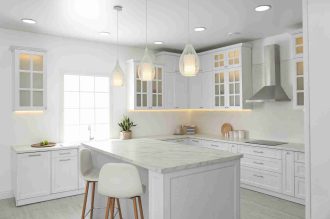
The first place we suggest it. A honed gray marble on a full kitchen, perimeter included, is a practical choice for a home-owner who wants marble and cooks. The 3cm slab carries an eased or beveled edge with no build-up. The gray ground hides any small marks that daily use leaves on the marble. Put the most veined part of the slab on the island, where it is seen, and the quieter end on the perimeter.
Vanity tops, tub decks, shower walls, and floors. There has been Bardiglio on the bathroom floor in Italy since before anyone knew how to seal a countertop, and a honed slab floor or shower wall in this stone is the most attractive use you will find. The gray hides water spotting and soap film better than a white marble, and the honed surface is less slippery than a polished one. For a floor, ask us about the 3cm slab cut into large-format tiles.
A gray marble surround with a honed hearth is one of the oldest uses of this stone and still one of the best. The veins read well at eye level, heat from a fireplace does not trouble marble, and a hearth in honed Bardiglio takes everyday wear from a log basket without compromising it. A single slab usually covers the surround, hearth, and mantel shelf.
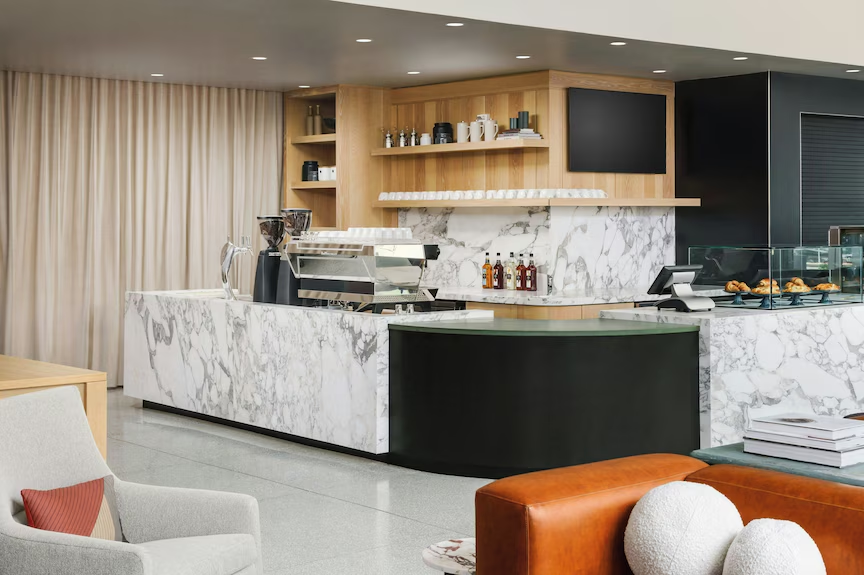
Dining tables, console tops, stair treads, and reception desks. Bardiglio has a long history being used as stairs and furniture because it reads as stone rather than as an attention-grabbing showpiece, and because the gray ages gracefully. In hospitality and multi-unit work, the quiet pattern makes slab-to-slab consistency easier, as long as the slabs come from the same block.
Whether you’re seeking a free estimate, a showroom visit, or an in-home evaluation, our team is ready to transform your space.
Bardiglio is a calcite marble from the Apuan Alps of Tuscany, quarried in the Carrara basin and in the Versilia valleys to the south; the same mountains that produce White Carrara, Calacatta, and Statuario. Where those marbles are white because the original limestone was nearly pure, Bardiglio is gray because its limestone carried more carbon and clay. The metamorphism that turned it to marble folded that material into the stone as a blue-gray ground and darker gray veins. Same mountain, same mineral, different sediment.
The name is an old Carrara trade word for the gray marbles of the district, and it covers a family of stones rather than a single stone. The Italian trade’s reference, the CMP Solmar handbook of Apuan commercial names, files the gray marbles under their own heading, lists Bardiglio Imperiale as gray and Bardiglio Nuvolato as gray with lighter veins. It also records that in the early 1800s the French trade sold the Versilia grays as “Bleu Turquin” and “Bleu Fleuri,” names that still turn up on antique fireplaces. On our floor the stone reads closer to the veined type: a uniform gray ground with fine, directional veins rather than clouds.
The chemistry of this stone is ordinary marble. Bardiglio is calcite, about Mohs 3, and it reacts with acids; the Geology.com marble reference notes that pure marble is white and that clay, iron oxide, and bituminous material are what give marble its colors, which is exactly what you see in a gray slab. Nothing in the gray makes the stone harder or softer than a white marble. What the gray changes is visibility, not durability.
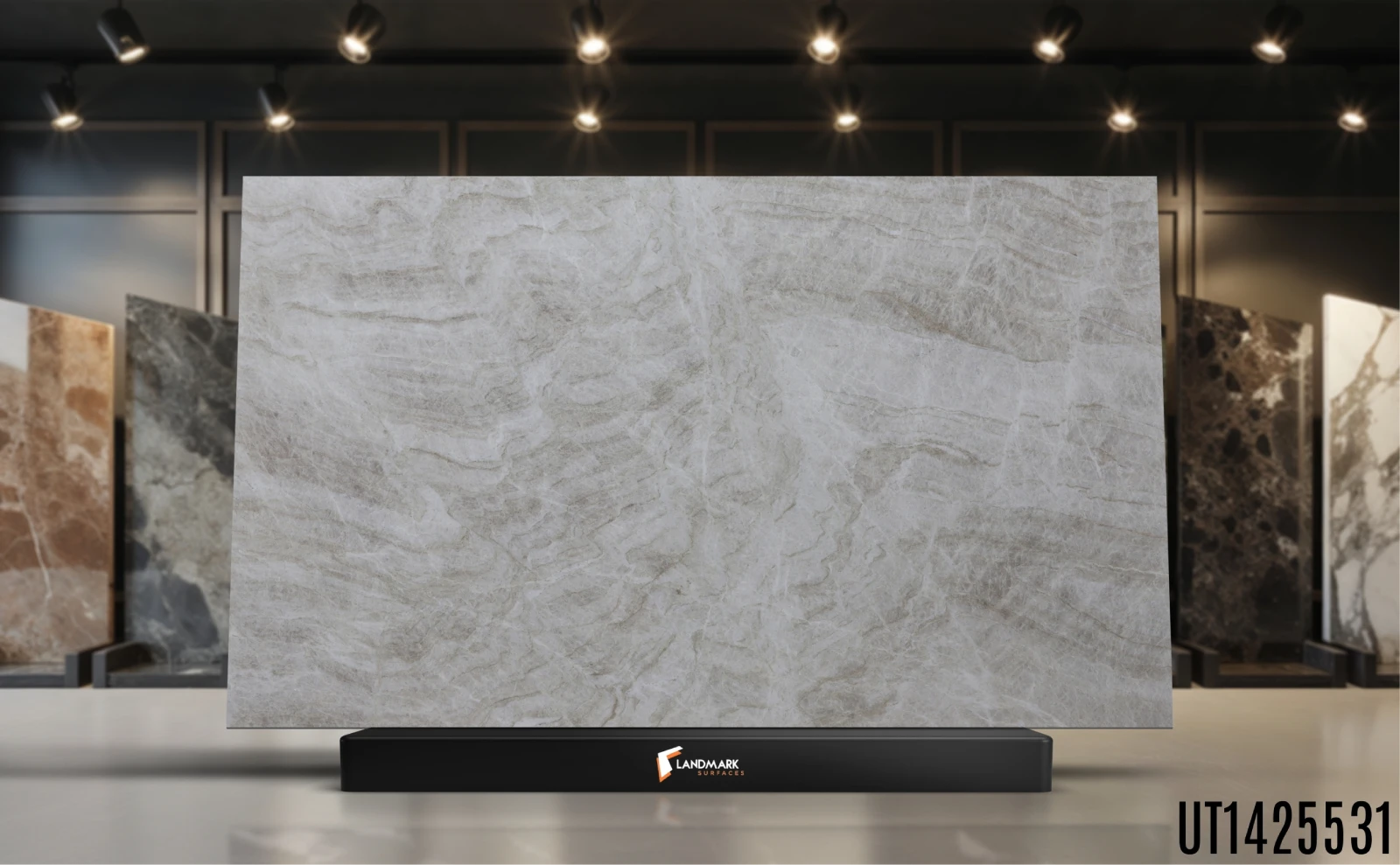
Two names to keep separate. Several gray quartzites and a few gray porcelains are sold as “Bardiglio” or “Bardiglio look.” They share the color, not the chemistry: a quartzite will not etch, and a porcelain has no depth. The stone on this page is Italian marble. If you are comparing a quote of another stone that says Bardiglio at a quartzite price, ask what it is made from and where it was quarried.
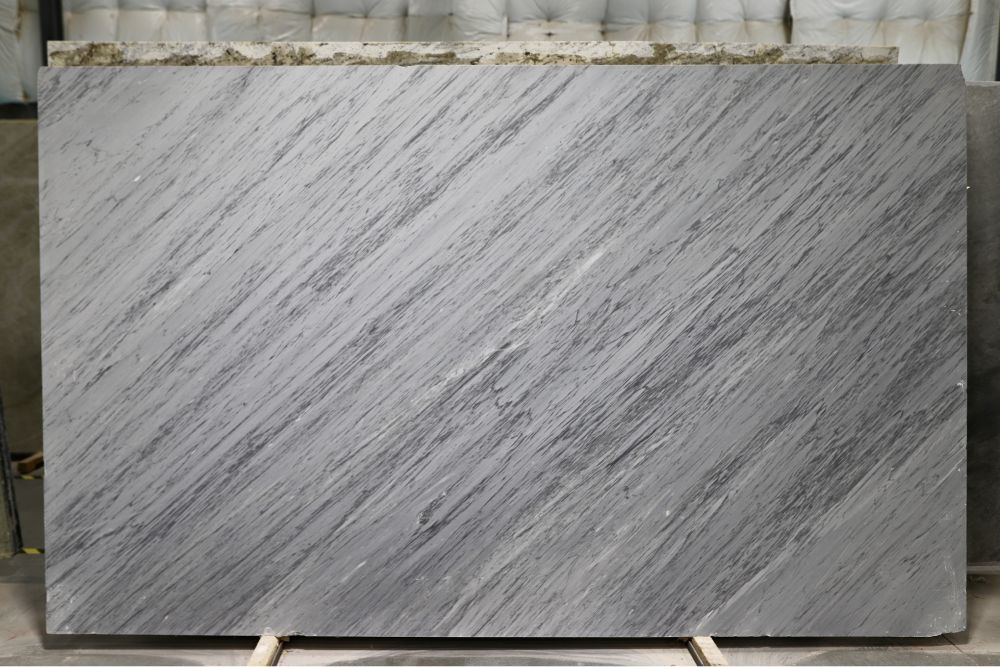
Our Bardiglio marble in Chantilly is 3cm honed, about 118 by 72 inches, from one lot. The ground is a mid blue-gray, even across the slab, with no clouding and no white field. The veining is fine and linear: darker gray threads and a few lighter ones running diagonally from lower left to upper right, denser through the center of the slab and thinning toward the edges. It reads as texture from across a room and as intricately detailed up close. As of this writing the lot is small; check live inventory for what is on the floor today, and ask before planning a large kitchen around it.
Direction matters. Because the veins run on a diagonal, a piece rotated 90 degrees reads differently from one left as it sat on the slab. We keep every cut piece in the same orientation, so the diagonal runs the same way across a kitchen. We discuss which way it should run at the template appointment. On an island the most popular choice is having the veins to run toward the main sight line into the room.
Why 3cm matters here. Most of the marble on our floor is 2cm, which means it needs a built-up edge on every counter. This slab is 3cm, so the edge you see is the stone itself: an eased, beveled, or half-bullnose edge with no lamination line and no miter. The 3cm also means the slab is heavy, which the fabrication notes cover.
Honed from the factory. The lot we carry is honed, which is the finish we prefer for it. We can polish a piece upon request for a wall or a fireplace, where the shine will not come in contact with lemon or other acids. We will show you an etched sample of each finish before you choose to make sure you know what you are getting.
Gray marble varies block to block, and veined and clouded types can come from the same quarry. A future lot may run bluer, more clouded, or more sharply veined than the slab photographed here. The slab you choose is tagged to your job the day you choose it.
Bardiglio is a straightforward marble to fabricate, and the only things we are careful about are the diagonal vein and the considerable weight of a 3cm slab.
Edges on 3cm. No build-up. The thickness carries a clean eased edge, a small bevel, or a half bullnose with no glue line. This is a real advantage on a stone this uniform in color, because a laminated edge on a gray marble is more noticeable at the joint. We ease every exposed corner by default; marble chips on a sharp 90-degree corner more readily than granite. Heavy ogee profiles are possible on 3cm, but on a veined stone they cut across the vein direction and read busier than the top; we recommend the simpler profiles.
Vein direction. We lay the kitchen out on the digital template with the slab photo underneath it, keep every piece in its original orientation, and set the direction so the veins run the same way on the island and the perimeter. Where a run turns a corner, the veins will change direction at the seam; we place that seam where the eye does not rest.
Seams. On a fine, even texture seams are easy to hide, and a tight seam on honed Bardiglio is among the least visible in natural stone. We place them away from the sink and in the most uniform part of the pattern.
Cutouts and rodding. Narrow strips at a sink or cooktop are rodded on marble as a standard practice, even at 3cm. Undermount sink cutouts are eased and honed to match the top rather than left sharp.
Honing and sealing in the shop. Cut edges and sink reveals are honed to match the face, which takes longer than polishing them and is included in the fabrication price. Every piece gets a penetrating sealer before it leaves and a second coat at installation; a honed surface is slightly more open than a polished one and does not hold a sealer as long.
Weight and lead time. A 3cm slab at 118 by 72 inches weighs roughly 1,000 to 1,100 pounds. That affects how we carry it, how many hands are on the install, and whether a long island overhang needs support. Fabrication and installation typically run 5 to 7 business days from template.


Bardiglio marble typically runs $75 to $140 per square foot installed, which places it with White Carrara at the more accessible end of our marble collection and well below the Calacattas. Gray Carrara-basin marble is quarried in volume, and the honed finish adds no cost to the slab, so most of the cost is fabrication and installation rather than the stone itself.
What moves the number:
For comparison, the Calacattas on our floor run $120 to $280 per square foot installed depending on the stone and grade, soapstone $70 to $120, and a gray engineered quartz $50 to $110. Our countertop installation cost guide explains what is included in an installed price.
All figures are general ranges. The real number depends on the slab, the square footage, the edge, the number of seams and cutouts, and whether any of the stone goes on a wall or floor. It is set at the free in-home estimate after we have measured.
A honed gray marble is the most forgiving marble we sell, but it is still marble. The surface conceals most of what it goes through; but the chemistry does not change how it reacts. Here it is compared to the three surfaces most often chosen instead of it.
| Day to day | Honed Bardiglio | Honed White Carrara | Soapstone |
|---|---|---|---|
| Lemon, wine, vinegar, tomato | Etches; nearly invisible on honed gray | Etches; faint on honed white | No etching |
| Knives and dragged pots | Scratches; marks blend into the gray | Scratches; marks show as lighter lines | Scratches easily; sands out |
| Hot pans | Tolerates heat; trivets anyway | Tolerates heat; trivets anyway | Tolerates heat well |
| Stains (oil, coffee, red wine overnight) | Possible; less visible on gray; poultice lifts | Possible and visible; poultice lifts | Oil darkens evenly; part of the look |
| Sealing | At install, then about yearly | At install, then about yearly | None; oiled or waxed by choice |
| Repair | Re-honed in place | Re-honed in place | Sanded in place |
| Look over ten years | Softens into an even patina | Softens; marks show more | Darkens to charcoal |
| Installed cost per sq ft | $75 to $140 | $70 to $130 | $70 to $120 |
Etching. Calcite reacts with acid; the Natural Stone Institute’s care guide names lemon, vinegar, and other acids as the main cause of dullness or etchings on calcareous stone. On honed Bardiglio an etch is a slightly lighter patch visible at a low angle, and on a mid-gray ground it disappears into the surface faster than on any white marble we carry. In a bathroom or on a wall it is rarely an issue at all.
Stains and sealing. Gray hides a stain that white would show, but oil can still get into an unsealed marble. Seal at installation and about once a year in a kitchen, less in a bathroom, and re-seal when water stops beading. A dark spot that does appear comes out with a poultice, which we can supply or do for you.
Cleaning. Warm water and a pH-neutral stone soap. No vinegar, no citrus cleaners, no bathroom sprays with acid, and no regular use of bleach. A cutting board for knives, felt under anything that gets dragged, coasters under wine. In a shower, a squeegee after use keeps mineral spotting from forming on the honed surface.
Where we would slow you down
For how honed, polished, and leathered finishes change a stone’s behavior, see our countertop finishes guide.


A gray calcite marble from the Apuan Alps of Tuscany, the same mountains that produce White Carrara and Calacatta. The gray comes from carbon and clay in the original limestone. It has the same hardness and the same acid sensitivity as white marble; the color changes what shows, not how the stone behaves.
Yes, honed. It etches from acids and scratches from knives like every marble, but on a honed gray surface the marks are close to invisible and fade into the stone with use. We stock it honed and 3cm for that reason. It is one of the few marbles we recommend for a full working kitchen.
Honed for counters, floors, showers, and anywhere acid or foot traffic lands. Polished for a fireplace or a feature wall where the shine will probably not come into contact with lemons. Our lot is honed from the factory, and we can polish a piece upon request.
Same mountains, same calcite, same care. Carrara has a white ground with gray veins; Bardiglio has a gray ground with darker gray veins. Bardiglio hides etching, scratches, and stains better; Carrara brightens a room more. Prices are similar.
Yes. A penetrating sealer at installation and about once a year in a kitchen, less in a bathroom. It slows stains from penetrating into the stone; it does not stop etching, however. Re-seal when water no longer beads on the surface.
Usually, yes, in 3cm honed slabs, but natural stone inventory changes weekly and this lot is not large. Check the live inventory page or contact us before visiting, and we will tell you what is on the floor that day.
Bardiglio is a must-see marble if you find yourself coming back to marble, but keep talking yourself out of white. The slab is in our Chantilly warehouse; bring a cabinet door, feel the honed surface yourself, and ask for a lemon and an offcut to see it etch. The decision usually becomes obvious quickly after that.
Pricing and lead times on this page are general ranges for planning purposes. Actual cost depends on the slab selected, measured square footage, edge profile, seams, cutouts, and whether any stone is cut for walls or floors, and is confirmed at your free in-home estimate. Slab availability changes weekly. Natural stone varies from block to block, and future lots of Bardiglio may differ in tone and veining from the slab shown. Marble etches and scratches in normal use; this is a property of the stone, not a defect. Warranty terms vary by product, typically 6 to 10 years.
