



Years of Experience
0 +
Spotless Countertop Installation in Less Than a Week By 24+ years of experience and cutting-edge technology of Stone Fabrication & Installation there is no uncertanity


25391 Pleasant Valley Rd.
Chantilly, VA 20152
Phone: (703) 259-9027
5655 General Washington Dr
Suite G
Alexandria, VA 22312
Phone: (703) 259-9028
Blue Bahia granite is a Brazilian sodalite stone sold under the granite name, and it is one of the few natural slabs that is truly blue rather than blue-gray. We keep it on the floor in Chantilly since very few stone suppliers in the area carry it. As of this writing we have several 3cm polished slabs on the floor; see live inventory for current availability.
This page is written to help you decide whether Blue Bahia belongs in your project, not just to showcase the stone. We cover what the stone is made of, why the slabs on our floor look different from the photos you have seen online, where it performs well, where it does not, and what it tends to cost installed.
Blue Bahia is not a granite in the geological sense. It is a sodalite syenite, an igneous rock quarried from the Itaju do Colônia stock in the state of Bahia, northeastern Brazil. The blue comes from the mineral sodalite rather than from any dye, resin, or surface treatment. The trade calls it granite because it is quarried, cut, and polished like one, and because buyers are more familiar with granite and not the geological term “sodalite syenite”.
Sodalite is a feldspathoid mineral with a hardness of 5.5 to 6 on the Mohs scale and is considered brittle in mineralogical terms, according to the Mindat sodalite reference. A 2014 study of the Itaju do Colônia deposit by the Federal University of Sergipe describes what you see in this slab: the blue is sodalite, the black specks are biotite, the gray and white areas are albite and alkali feldspar, and the greenish tints come from nepheline and aegirine. The thin white veinlets that cross the blue are feldspar-rich and, in the study’s words, very friable, which is why slabs are resin-filled and mesh-backed before they are shipped. Each of those minerals behaves differently under a knife, a lemon, or a hot pan, which is why the sections below matter more for this stone than for a typical granite.
You will also see it listed as Azul Bahia, Bahia Blue, Granito Azul, or Sodalite Blue. Those are the same material from the same region, not different stones. The same deposit also supplies sodalite for jewelry, and Bahia is the only Brazilian state that produces it. Do not confuse it with Blue Bahia the Caribbean resort or with sodalite beads sold as gemstones; this page is about slab material for countertops and architectural work.
Truly blue natural stone is rare because sodalite rarely forms in bodies large enough to quarry. That scarcity, plus the cost of shipping and the loss during fabrication described below, is what puts Blue Bahia at the top of the natural stone price list.

 4.9287 reviews

 Trustindex verifies that the original source of the review is Google.
 Trustindex verifies that the original source of the review is Google.
 Trustindex verifies that the original source of the review is Google.
 Trustindex verifies that the original source of the review is Google.
 Trustindex verifies that the original source of the review is Google.
 Trustindex verifies that the original source of the review is Google.
 Trustindex verifies that the original source of the review is Google.
 Trustindex verifies that the original source of the review is Google.


 Trustindex verifies that the original source of the review is Google.
 Trustindex verifies that the original source of the review is Google.
 Trustindex verifies that the original source of the review is Google.


 Trustindex verifies that the original source of the review is Google.
 Trustindex verifies that the original source of the review is Google.
 Trustindex verifies that the original source of the review is Google.

 Trustindex verifies that the original source of the review is Google.
 Trustindex verifies that the original source of the review is Google.
 Trustindex verifies that the original source of the review is Google.
 Trustindex verifies that the original source of the review is Google.
 Trustindex verifies that the original source of the review is Google.
 Trustindex verifies that the original source of the review is Google.
 Trustindex verifies that the original source of the review is Google.
 Trustindex verifies that the original source of the review is Google.
 Trustindex verifies that the original source of the review is Google.
 Trustindex verifies that the original source of the review is Google.


 Trustindex verifies that the original source of the review is Google.


 Trustindex verifies that the original source of the review is Google.
 Trustindex verifies that the original source of the review is Google.

 Trustindex verifies that the original source of the review is Google.
 Trustindex verifies that the original source of the review is Google.
 Trustindex verifies that the original source of the review is Google.
 Trustindex verifies that the original source of the review is Google.


 Trustindex verifies that the original source of the review is Google.
 Trustindex verifies that the original source of the review is Google.
 Trustindex verifies that the original source of the review is Google.
 Trustindex verifies that the original source of the review is Google.
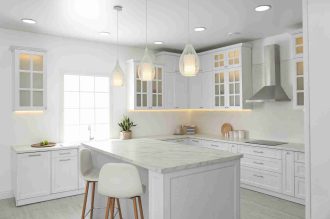
Blue Bahia is best used as a focal point: an island top, bar, fireplace surround, powder room vanity, or reception desk. It can serve as a full kitchen perimeter, provided it is treated like marble.
Where we would slow you down. A busy family kitchen not using cutting boards and taking no precautions: scratches and etchings are inevitable, and on a stone at this price, that is an expensive lesson to learn. Outdoor kitchens: we have not seen enough long-term exterior installs of Blue Bahia in this climate to recommend it with confidence. Exterior applications should be evaluated case by case. Ask us about your project and we can offer guidance based on our experience. A tight budget: one slab of Blue Bahia can cost as much as four slabs of premium granite, which is why many projects reserve it for the island and use a quieter stone elsewhere.
The island carries the color, while a quieter stone on the perimeter takes the brunt of the knives and acidic spills. This is the most common way we see Blue Bahia used, though it typically requires two to three slabs.
Low traffic, high visibility, usually one slab. Backlighting does not work on this stone because sodalite is opaque, so plan the lighting from above.
Vertical, no acid, no knives. The diagonal movement in our current lot is especially effective when viewed vertically, and we would recommend the slab with the widest blue band.
In lobbies and hotel bars, multi-slab color consistency is the biggest issue, and the best results come from using slabs from the same block and laying them out side by side before cutting.
Whether you’re seeking a free estimate, a showroom visit, or an in-home evaluation, our team is ready to transform your space.
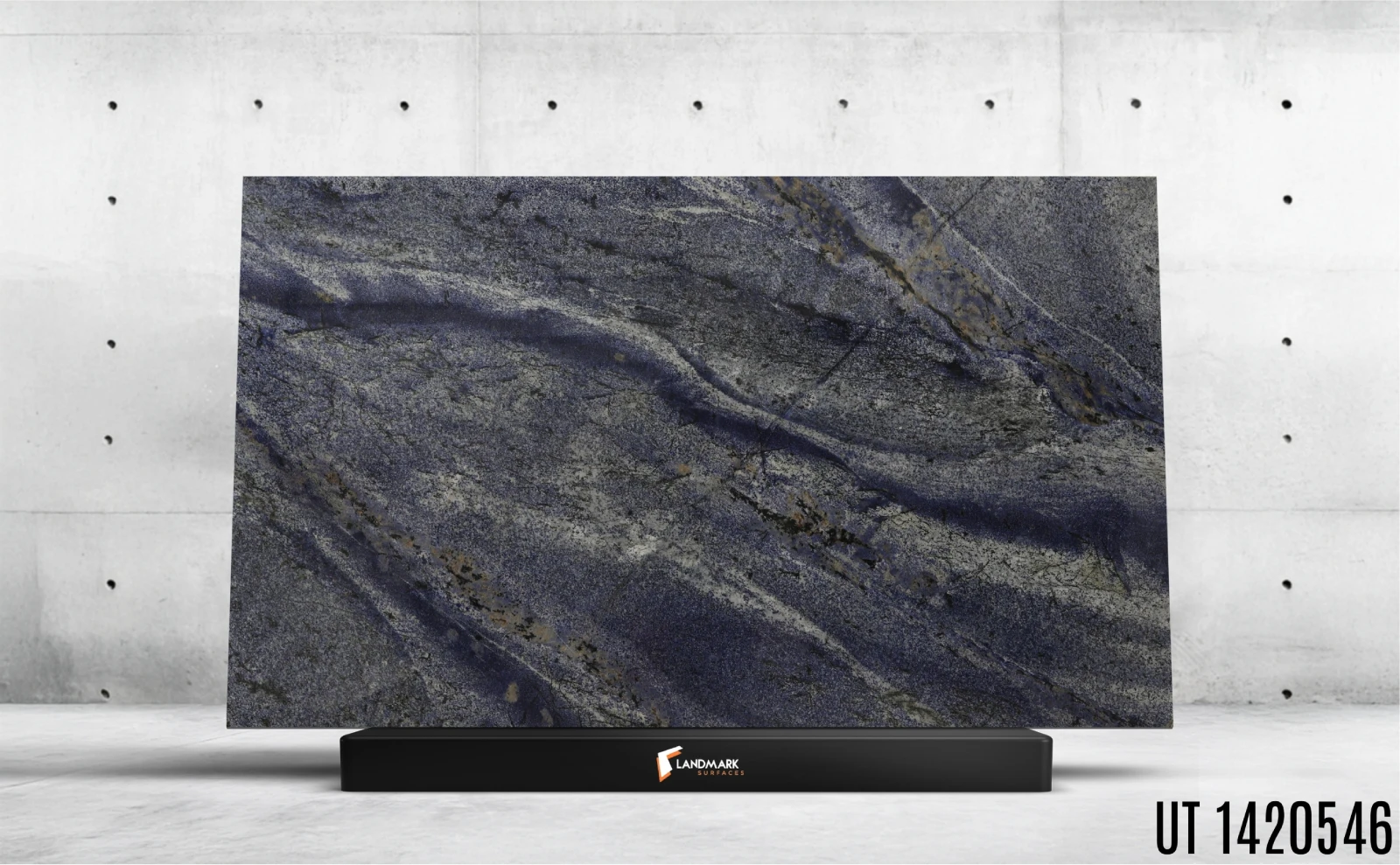
The Blue Bahia slabs in our Chantilly warehouse are darker and quieter than the electric cobalt you may have seen in most online photos. The background is a charcoal gray, the sodalite runs through it in indigo to violet bands that flow diagonally across the slab, and silver-gray crystal zones sit between the bands. If you are looking for a swimming-pool blue, see this lot in person first; the color may not be what you expect.
Consecutive slabs from one block are the ones to look for. When two slabs are cut back to back, the pattern carries from one to the next almost line for line, and that makes them ideal for a bookmatched island, a long run with one seam, or a waterfall end where the vein needs to turn the corner and keep going. The current lot includes pairs like this, and we will point them out when you visit.
Within the same block, slabs still differ. One may carry a wider blue band through its upper third and read slightly bluer than its neighbors. That matters when the slab will stand vertically as a fireplace surround or a feature wall, where the band is seen at eye level rather than from above.
Three details worth looking for when you stand in front of these slabs:
This is natural stone, and the next block out of the quarry may carry tighter veining, more cobalt, or less. The slabs pictured are the lot on our floor as of this writing. Check live inventory for what is available today, then come look at it under different kinds of light before you commit.
Blue Bahia is softer than a true granite and it does not ignore acids the way granite does, so it behaves closer to a hard marble than compared to Black Pearl or Steel Gray. It is durable enough for a kitchen, but it performs best when maintained with the same care expected of marble and is less forgiving than granite.
| Property | Blue Bahia | Typical granite |
|---|---|---|
| Main mineral hardness (Mohs) | 5.5 to 6 (sodalite, feldspar) | 6 to 7 (feldspar, quartz) |
| Acid sensitivity | Sensitive to lemon, vinegar, wine, and acidic cleaners | Generally none |
| Sealing | Yes, and re-seal yearly | Yes, every 1 to 3 years |
| Heat | Tolerates hot pans; use trivets anyway | Tolerates hot pans |
| Scratching | Will show knife marks over time | Resists most knife contact |
| Slab prep | Usually resin-filled and mesh-backed | Often none |
Scratches. A steel knife is harder than sodalite. Cutting directly on the surface will leave marks that polish can soften but not erase. Always use cutting boards. This is the primary difference from conventional granite.
Etching. Acidic spills can dull the polish on Blue Bahia the way they do on marble, leaving a flat spot where the shine used to be. In our experience, it is less dramatic than on a soft marble, usually appearing as a small dull line or patch rather than a ring, but it is still a very real issue. Prompt cleanup of citrus, wine, and other acids, along with avoiding vinegar-based cleaners, will help preserve the finish. The Natural Stone Institute’s care and cleaning guidance applies here as it does to any natural stone.
Sealing and stains. The stone is dense, but the friable veinlets that get resin-filled at the factory can absorb oil at the edges. A penetrating sealer once a year keeps that from becoming a problem. If a drop of water stops beading on the surface, it is time to reseal.
Color under light. Sodalite shifts noticeably with light temperature. Under warm 2700K kitchen lighting these slabs lean violet; under daylight or 4000K they read blue. Bring a cabinet door and view the slabs under lighting that matches your project whenever possible. See our guide to countertop finishes for how polished, honed, and leathered surfaces change the read; for Blue Bahia we stock polished only, because honing mutes the blue.
Blue Bahia is cut slowly, laid out carefully, and handled more than most stones, which is reflected in the price. Blue Bahia requires a level of fabrication that differs from standard granite, and the pricing should reflect that.
Fissures and resin. Nearly every Blue Bahia slab leaves the factory resin-filled and mesh-backed because the block carries natural fissures and friable feldspar veinlets; the geologists who studied the deposit describe those white veinlets as crumbling during sample preparation. They are not cracks and they are not defects; they are where the sodalite and the surrounding minerals meet. We check each slab before cutting and plan the layout so that no veinlet runs across a narrow strip or lands at a sink corner.
Narrow pieces and cutouts. Anything under about 4 inches wide, and the strips on either side of an undermount sink, get steel rods set into the underside before the piece leaves the shop. On a conventional granite that is a judgment call. On Blue Bahia it is standard.
Layout and the vein. Because the slabs on our floor flow diagonally, we lay the kitchen out on the digital template with the slab photo underneath it before anyone touches a saw. The goal is simple: the blue band should enter the island on one side and leave on the other without interruption, while any seam falls in a gray area rather than through the band. For a waterfall end we cut the vertical panel from the same slab, directly below the top, so that the band turns the corner and continues down the face.
Edges. A polished edge on Blue Bahia shows a slightly different tone from the face because the sodalite crystals are cut at a different angle. Simple profiles (eased, small bevel, or a mitered waterfall) minimize the contrast. Ogee and other heavy profiles exaggerate it and expose more of the friable veinlets to chipping, so we steer clear of them on this material.
Weight. A full 3cm slab at 126 by 78 inches weighs roughly 1,200 pounds. That affects how we carry it, what we charge for the template-to-install trip, and whether the cabinet run under a large island needs extra support. We check all of that at the template visit.
Lead time. Fabrication and installation on a stone like this typically runs 5 to 7 business days from template, the same as most of our work, because the care goes into the layout stage rather than the installation schedule.


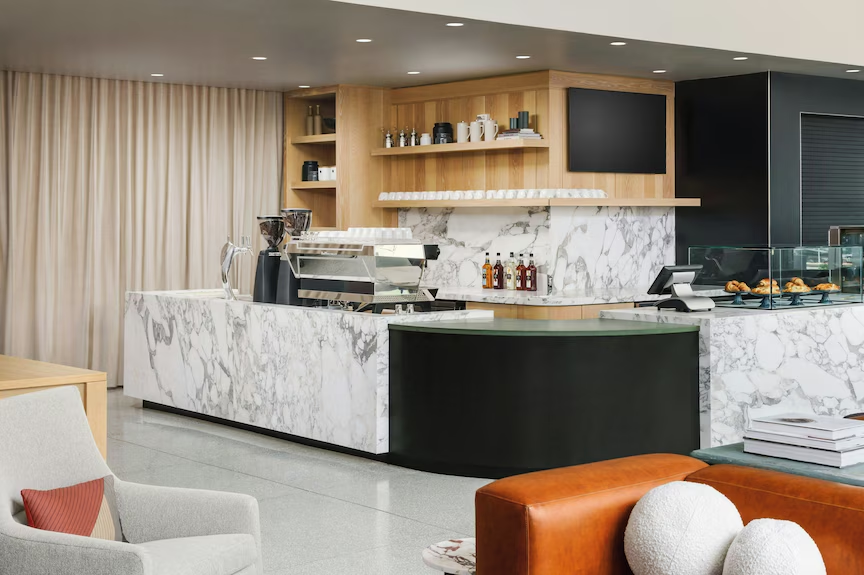
Blue Bahia granite typically runs $150 to $300 per square foot installed, which puts it three to five times above a mainstream granite and in the same range as the rarest quartzites. The slab itself is most of the cost; fabrication adds a smaller premium for the rodding, the slower cutting, and the layout time described in the fabrication notes.
What moves the price within that range:
For comparison, a well-chosen premium granite from our granite collection usually lands between $50 and $130 per square foot installed. Using Blue Bahia on the island alone and a quieter stone on the perimeter is how most of our clients get the blue without the full-kitchen price.
All figures are general ranges. The real number depends on the slab you choose, the square footage, the number of seams and cutouts, and the edge profile, and it is set at the free in-home estimate after we have measured.
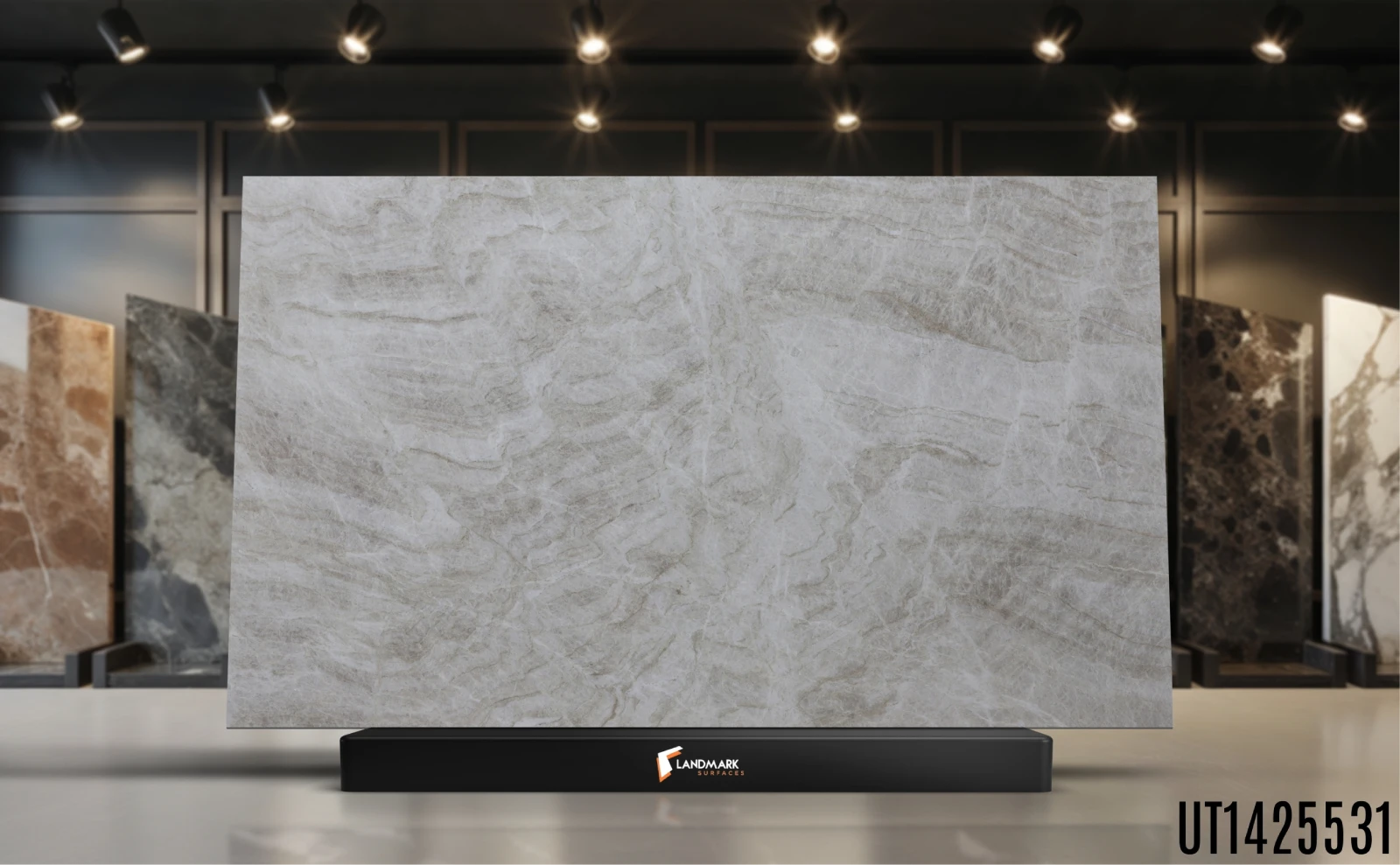
If you want blue but Blue Bahia is the wrong fit for the room or the budget, we carry several other natural slabs that read blue in daylight. None of them are as saturated, and each has trade offs.
| Stone | Type | How the blue reads | Why you would pick it instead |
|---|---|---|---|
| Lemurian Blue | Labradorite from Madagascar, sold as granite | Charcoal ground with steel-blue flashes that move as you walk past | Harder than sodalite, no friable veinlets, lower price |
| Blue Dream | Quartzite | Pale blue-gray with soft white clouding | Harder than Blue Bahia, lighter and calmer |
| Ijen Blue | Quartzite | Deep blue-gray with white veining | Closer in mood to Blue Bahia, more scratch resistant |
| Sky Blue | Quartzite | Light blue with gray and cream | Brighter kitchens, lower contrast |
| Mustang Blue | Quartzite | Dark blue-gray, strong movement | Dramatic look with quartzite durability |
| Blue Noir | Quartzite | Near-black ground with blue tones | For a darker, moodier scheme |
| Blue de Savoie | Marble | Gray-blue with white and dark veining | Soft, classic look for bathrooms and fireplaces |
For engineered options that mimic blue stone, see our blue quartz countertops guide. For how Blue Bahia fits among the colors homeowners actually choose, see the most popular granite colors.


No. Blue Bahia is a sodalite syenite from Bahia, Brazil. It is sold as granite because it is quarried and fabricated the same way, but it is softer than a true granite and more sensitive to acidic spills and cleaners as well.
Sodalite rarely occurs in blocks large enough to cut into slabs, the quarry output is small, and fabrication loses more material to fissures and vein placement than a plain granite does. Installed cost typically runs $150 to $300 per square foot.
Yes, with care. It handles heat well and is dense enough for daily use, but knives will scratch it and lemon, vinegar, or wine can dull the polish. Most owners put it on an island or bar and use a harder stone where the most use happens.
Yes. Apply a penetrating sealer at installation and again about once a year. When water stops beading on the surface, it is time to re-seal.
Yes. Azul Bahia is the Portuguese name for the same stone from the same region. Bahia Blue, Granito Azul, and Sodalite Blue are names also used for it.
Usually, yes, but natural stone inventory changes weekly and a lot can sell between visits. Check the live inventory page or contact us before you come in, and we will tell you what is on the floor that day.
Blue Bahia is a stone people drive a long way to see, and photographs, including ours, do not do it justice. The slabs are in our Chantilly warehouse, and the Alexandria showroom can arrange a viewing. Bring a cabinet sample and the light you are using, stand in front of the pair of slabs you want, and make your decision in person.
Pricing and lead times on this page are general ranges for planning purposes. Actual cost depends on the slab selected, measured square footage, seams, cutouts, and edge profile, and is confirmed at your free in-home estimate. Slab availability changes weekly; the slabs pictured may have sold by the time you read this. Natural stone varies from block to block, and future lots of Blue Bahia may differ in color and veining from those shown. Warranty terms vary by product, typically 6 to 10 years.
